
Creative Stimulation
Creativity is the key to imagining, adapting, and transforming.
Through practical and engaging experiences, develop mental flexibility, personal expression, and confidence to explore new possibilities.
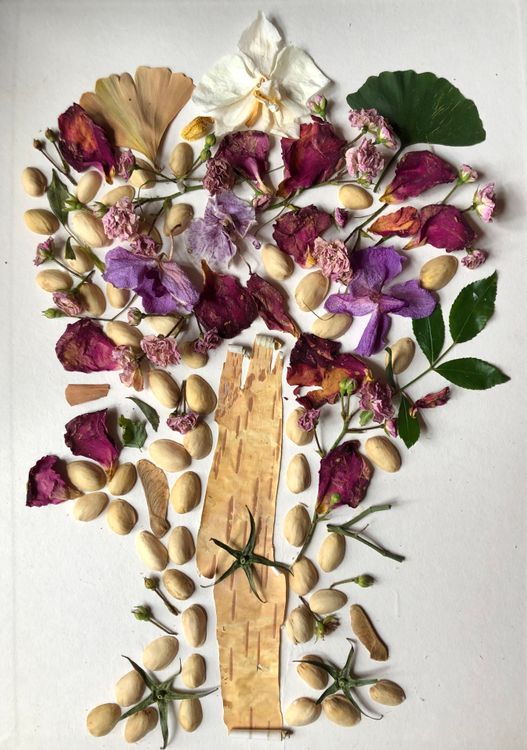
Creativity: An essential skill for the future
In a world of constant change, creativity has become one of the most valuable skills for people of all ages. Far more than artistic talent, creativity is the ability to imagine new possibilities, find original solutions, adapt to change, and turn challenges into opportunities.
In 2026, as technology and artificial intelligence become increasingly present in our daily lives, creativity remains one of our most uniquely human strengths. It enables us to innovate, communicate, build meaningful connections, and develop new ways of thinking and acting.
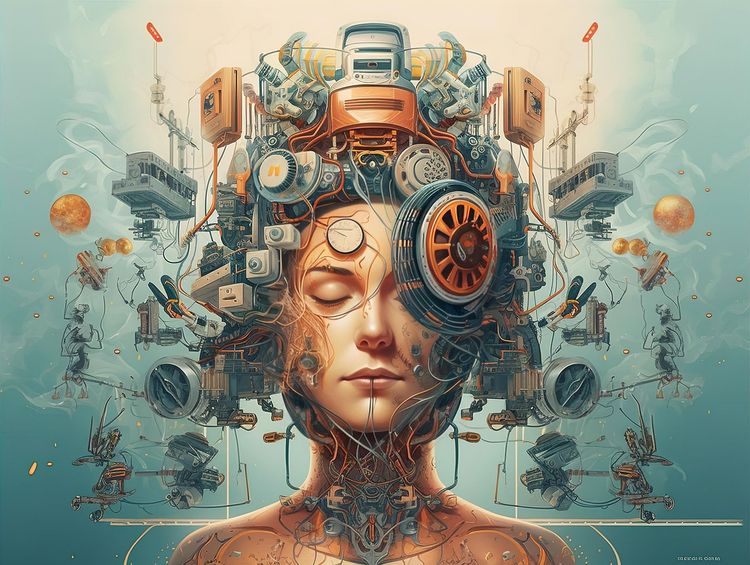
Why is it important to stimulate creativity?
Creativity strengthens the brain, improves problem-solving abilities, enhances mental flexibility, and contributes to emotional well-being. Creative individuals tend to adapt more easily to change, face challenges with greater confidence, and discover different perspectives when dealing with complex situations.
Furthermore, creativity encourages communication, collaboration, and empathy—skills that are increasingly valued in personal, social, and professional life.

Creativity at Every Stage of Life
Childhood
Creativity is born from curiosity, play, and discovery. When children are encouraged to explore, imagine, and experiment, they develop cognitive, emotional, and social skills that are essential for their growth.

Creativity at Every Stage of Life
Adolescence
During adolescence, creativity helps young people build their identity, develop critical thinking, and find innovative ways to express ideas, emotions, and life goals.

Creativity at Every Stage of Life
Adult and Professional Life
In the professional world, creativity is one of the most sought-after skills. Companies and organizations value people who can generate ideas, collaborate, innovate, and find effective solutions to increasingly complex challenges.

Creativity at Every Stage of Life
Active Ageing
Creativity also plays an important role in cognitive and emotional health throughout life. Creative activities stimulate memory, attention, and imagination while promoting a greater sense of achievement and well-being.

Benefits of Creativity in everyday life
✔ Enhances mental flexibility.
✔ Improves adaptability.
✔ Supports problem-solving skills.
✔ Strengthens self-esteem and self-confidence.
✔ Develops communication and personal expression.
✔ Promotes emotional well-being.
✔ Encourages lifelong learning.
✔ Strengthens social relationships and teamwork.
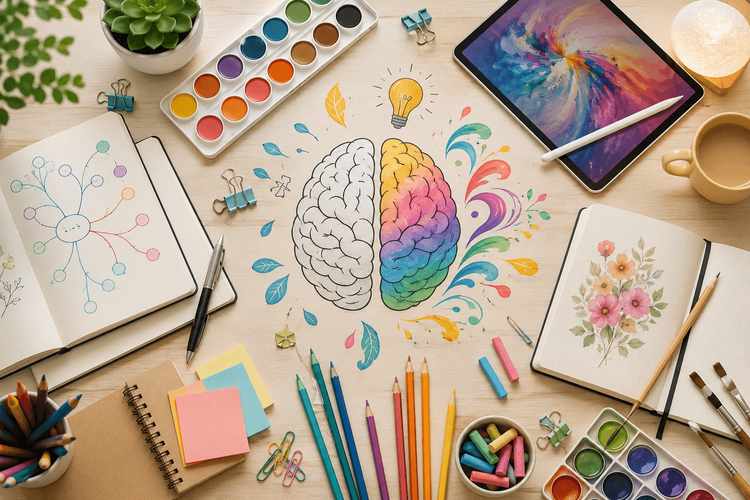
Creative tools for the 21st Century
Today, there are countless tools that can support the creative process:
✔ Mind maps to organize ideas visually.
✔ Creative journals and inspiration notebooks.
✔ Individual and group brainstorming techniques.
✔ Artistic and expressive resources.
✔ Digital tools and artificial intelligence to generate new perspectives.
✔ Divergent thinking and creative problem-solving exercises.

Workshops
Creativity develops through experience, discovery, and personal expression. That is why we have created a range of themed workshops that invite participants to explore different ways of creating, imagining, and communicating.
Each workshop uses practical and accessible approaches, providing moments of concentration, relaxation, learning, and well-being in a welcoming and inspiring environment.
Activities may include:
✔ Exploring colours and their meanings.
✔ Artistic creations inspired by nature and flowers.
✔ Designing and solving creative labyrinths.
✔ Mandalas to stimulate attention, concentration, and personal expression.
✔ Modelling and craft activities to develop coordination and imagination.
✔ Creative painting using different materials and techniques.
✔ Creative thinking exercises and problem-solving challenges.
✔ Collaborative projects that encourage idea sharing and social interaction.
.
More than the final result, we value the creative process. Each activity is an opportunity to experiment, discover new abilities, and strengthen confidence, mental flexibility, and emotional well-being.
The workshops can be adapted to different ages and settings, including schools, community centres, institutions, companies, and active ageing programmes.